

Geothermal energy uses heat from inside the Earth to provide electricity, heating, or cooling.
At a basic level, geothermal systems need three things:
- A heat source (hot rock or magma at depth)
- Water or another fluid to transport the heat
- Pathways like fractures in the Earth that allow the fluid to circulate
The Earth's interior is naturally much warmer than its surface. Geothermal systems leverage this temperature difference by drilling wells into underground reservoirs of hot water or steam. Heat from these resources can be used directly for heating and cooling or converted into electricity.

Schematic of a geothermal power plant.
Department of Energy
Unlike some other types of renewable energy, like solar and wind, geothermal energy can operate around the clock, providing reliable power regardless of weather conditions.
When it comes to renewable energy, Arizona is best known for its abundant sunshine for solar power. However, the state also possesses significant geothermal resources beneath the surface. Hot and warm springs, elevated geothermal gradients, thin crust, and young volcanism are all indicators of geothermal heat as a viable subsurface resource. Arizona’s neighboring states of California, Nevada, New Mexico, and Utah have similar geologic settings, with a long history of geothermal exploration and development

Ormat's Mammoth Pacific 40 MW geothermal power plant. The first units were installed in 1984, later units in late 1980s and early 1990s. The plant is located near Mammoth, CA, just off Highway 395.
Paul Gipe
Interest in geothermal energy has increased significantly in recent years as Arizona seeks reliable, long-term, and durable low-carbon energy sources that can complement other power sources and support growing electricity demand.
Arizona Geological Survey (AZGS) has researched geothermal resources in Arizona since the late 1970’s, and continues to lead opportunities to explore, catalog, and map these resources. More recently, the Arizona Governor's Office of Resiliency invested $1 million in a statewide geothermal resource assessment led by AZGS. The project will update decades-old resource maps, compile new geological and geophysical data, and identify areas with the greatest potential for future development. This project will continue to expand our experience and leadership since AZGS led the National Geothermal Data System in 2014.
At the federal level, geothermal energy has received growing support through research funding, permitting reforms, and programs designed to accelerate deployment of new geothermal technologies.
New technologies that expand opportunities
Historically, Arizona's geothermal resources have been used primarily for low-temperature direct-use applications such as fish hatcheries, greenhouses, and heating buildings. Advances in drilling technology and geothermal exploration techniques are now expanding opportunities for electricity generation and other energy applications from deeper geologic environments.
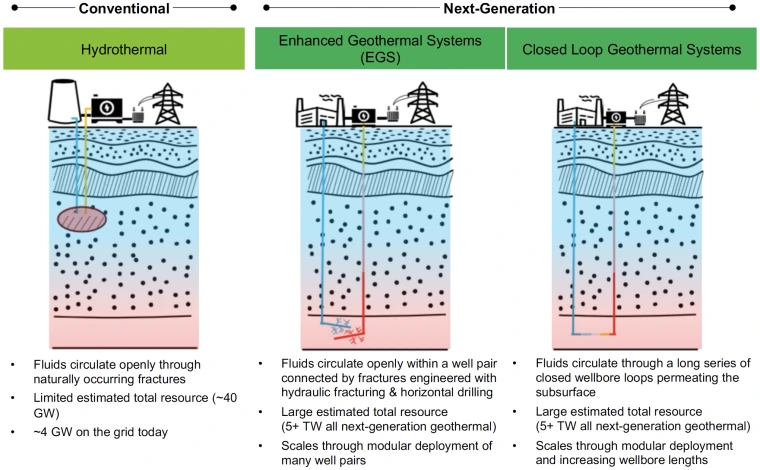
Geothermal technology schematic across CGS (left) and EGS (right) designs.
Department of Energy
Traditional geothermal development relies on naturally occurring hot water reservoirs; these are called Conventional Geothermal Systems (CGS). Enhanced Geothermal Systems (EGS) use new technologies to create engineered underground circulation pathways allowing heat extraction from deep rock formations that were previously impractical and uneconomical to develop. As these technologies mature, areas of Arizona that were once considered unsuitable for geothermal development may become viable energy resources. Arizona and AZGS at the University of Arizona is well positioned to explore how geothermal energy and technologies can contribute to a diverse, resilient, and affordable energy future.
AZGS Researchers are currently building the new Arizona Geothermal Data Catalog web map application – look for its debut in 2027!